

Mr. Black: Wh-What do you think — I slapped a clown suit on some wino? (chuckles nervously and pulls at his shirt collar) I mean...
Barney: (dressed as Krusty) Yeah, Bart! I am so Krunchy the Clown! (belches)
Every now and then, a celebrity in the business will become extremely in demand among audiences, and it is suggested that a piece of media requiring voice acting — films, cartoons or video games — with them in it will be profitable enough to be worth investing in. And the thing is, sometimes, you don't actually need the real-life celebrity.
After all, the celebrity may be busy with other commitments, such as tours, performances and/or participating in events, and be unavailable to voice themselves. Perhaps the work is in a language that the celebrity is not fluent in. Or you may be able to pay them royalties for their likeness, but not their voice.
So for quite a few promotions willing to pay the licensing fees, they turn to soundalikes, voice actors whose job is to imitate the celebrity. Thus, the star is not quite starring.
Sometimes, this is unavoidable regarding the license to a celebrity's likeness. They may be aging and thus too old to sound like how they did in their prime, or may have passed away and be obviously unable to voice themselves. In those cases, a soundalike is the only option available.
Especially common with shows about musicians, since you can drop in a song by the musicians in each episode to up the appearance of celebrity-association. At least with the music segments you'll probably have to keep their singing voices, leaving your own Non-Singing Voice actors to play them for the rest of the show.
Often, the characters are flanderized versions of the celebrities' public personas, and can therefore veer into third-party Adam Westing.
Compare and contrast Celebrity Toons, which may star the person in question.
Examples
- Pink Lady Monogatari: Eiko no Tenshitachi is an anime telling the story of real-life Japanese pop duo Pink Lady. The singers didn't voice their characters, nor the opening or the ending songs. They only appeared in some live-action sections.
- Forrest Gump uses archival footage to depict the titular character meeting historical figures, including Presidents John F. Kennedy, Lyndon Johnson and Richard Nixon, as well as Alabama Governor George Wallace and Beatle John Lennon.
- Happens a lot in biopics:
- In The Jolson Story, Larry Parks played Al Jolson, but used Jolson's actual singing voice.
- In another musical Biopic, Three Little Words, Helen Kane sang "I Wanna Be Loved By You" in her own voice, though Debbie Reynolds appeared as her on screen.
- And let's not forget Jamie Foxx in Ray. Those songs are all the original recordings by Ray Charles.
- Angela Bassett played Tina Turner in What's Love Got to Do with It (1993), but not only was Tina's singing voice used, she actually re-recorded the songs for the film. Averted in the same movie, however: Laurence Fishburne, as Ike, actually does sing his parts on "Proud Mary".
- In Great Balls of Fire!, Dennis Quaid as Jerry Lee Lewis has his singing done by The Killer himself (but Quaid really is playing the piano).
- The 1990s TV movie The Jacksons: An American Dream (based on Katherine Jackson's book My Family) does this. All the Jackson family members are played by actors but for most songs, they used original recordings of the Jacksons singing with others using new recordings of the songs by other singers.
- Bohemian Rhapsody had Rami Malek as Freddie Mercury, but used Freddie's original recordings for the songs. The only times Rami actually does sing are when Freddie improvised. Also, a stand-in is used for scenes involving Freddie's cats as Rami is allergic.
- House of Gucci: Grace Jones and Karl Lagerfeld attend fashion shows in The '90s. They're both played by actors (Lagerfeld would have been too old and passed away in 2019 way before filming began, and Jones is over 70).
- Factory Girl, the biopic of Edie Sedgwick, has Mick Jagger turn up at one of Andy Warhol's parties—shot entirely from behind as he marches stiffly through the throng of partygoers reacting excitedly to his presence. Bob Dylan, by contrast, gets the No Celebrities Were Harmed treatment via a fictional character obviously based on him, after Dylan himself threatened to sue. Most of the other characters (Sedgwick, Warhol) were either dead or fictional composites.
- In Scarface (1932), the alternate ending was filmed with a stand in.
- The Lifetime biopic, Whitney, about Whitney Houston, used R&B artist Deborah Cox to sing Whitney's songs due to issues with the copyrights.
- The Brødrene Dal movie kind of featured Trond Kirkevaag as Brumund, despite releasing three years after his 2007 death. They used recordings of their stage show from 1997 with the other two really acting while he communicated with them from afar with a video transmitter. The movie was not well received, due to still feeling too soon for the last two actors and fans.
- Stop! Look! And Laugh!: Despite receiving top billing, The Three Stooges only appear through Stock Footage from eleven of their shorts. They never actually appear in person during the film. Sadly this trope was enforced for Curly Howard who had died in 1952.
- In the television series based on The Nightmare Room, the narrator claims to be R. L. Stine, but he was actually voiced by James Avery.
- Real life political theorist Lawrence Lessig appears in The West Wing episode "The Wake Up Call". However, since he isn't an actor, he's played by Christopher Lloyd.
- During filming for his "Who Is It" music video, Michael Jackson wasn't available for the full shoot due to being busy with the Dangerous World Tour at the time. Noted Jackson impersonator E'Casanova Evans stood in for Jackson during scenes where his face isn't fully shown.
- In Twilight Zone, Tim Kitzrow does the voice of Rod Serling, who had died twenty years prior.
- Kitzrow also voices The Shadow in the pinball based on the film, as Alec Baldwin was not available. However, Penelope Ann-Miller, John Lone, and Tim Curry voiced additional dialog with their characters.
- Played with in Gilligan's Island. While Bob Denver provides the voice of Gilligan, impersonators were used for Mr. Howell, and the Professor. Further played with in The Skipper's case, whose dialog consists of both a soundalike impersonator and repurposed dialog from an episode from the original series' first season.
- Quite obviously (since the characters are kids), none of the pros voice themselves in the Backyard Sports series.
- Catwoman played up the fact that Halle Berry portrays her, to the point that the back of the game box states that she is Catwoman. However strangely, Berry only voices the level select screen. Jennifer Hale voices her in-game.
- Fatal Fury: City of the Wolves:
- In the game, football superstar Cristiano Ronaldo appears as a Guest Fighter. This game assigns two voice actors per character, with one speaking English and the other in Japanese. However, Ronaldo doesn't voice himself in either language, since he's voiced by Juan Felipe Sierra and Masaaki Mizunaka in English and Japanese respectively.
- The same applies for DJ and music producer Salvatore Ganacci who appears as a fellow celebrity guest star, who is not voiced by himself in either language, but rather by Sean Chiplock and Hinata Tadokoro respectively.
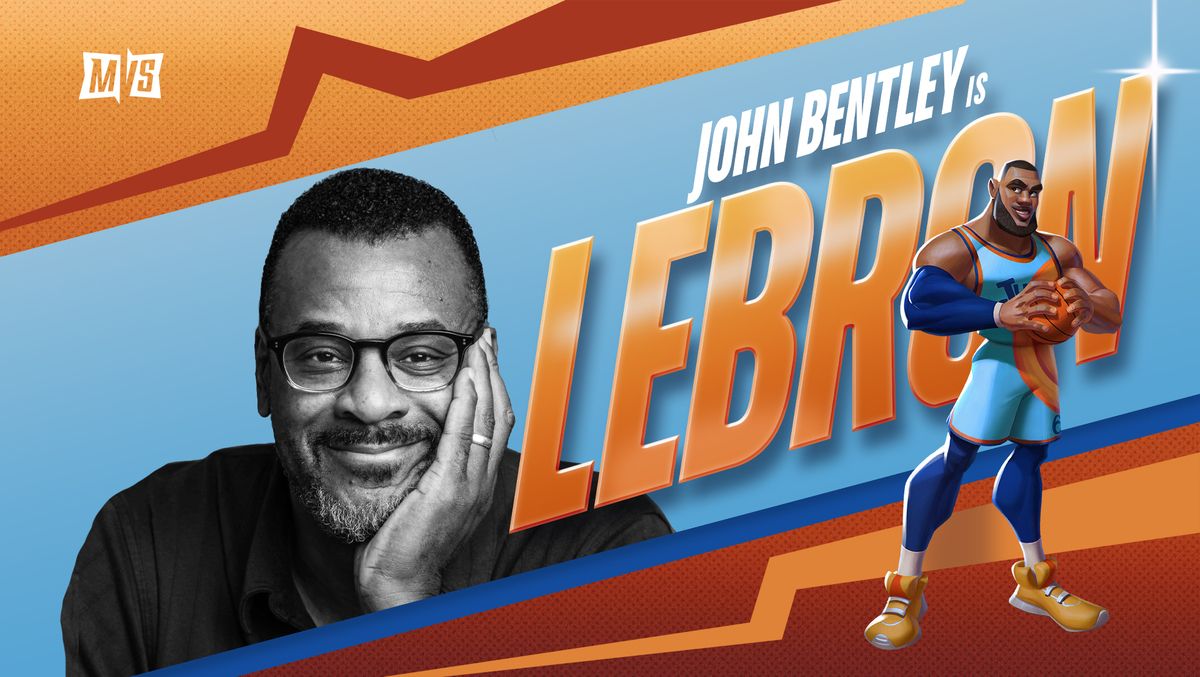
- MultiVersus: Basketball legend LeBron James is a playable fighter, owing to his appearance in Space Jam: A New Legacy. He portrayed himself there, both in live-action and in animated segments, while in the game he's voiced by John Eric Bentley.
- In The Nameless Mod, a seven-years-in-the-making modification for the first Deus Ex game, the player character is the project's lead Trestkon. Lawrence "Trestkon" Laxdal did not provide the voice (although he does other characters). Jonas Waever, another high ranking person in the development, does voice himself.
- In Smite, when the band Slipknot had exclusive character skins, only Alessandro Venturella and Michael Pfaff were voiced by themselves
 .
.
- Although this is not related to the regular examples, the "Dan Green" videos from Yu-Gi-Oh! The Abridged Series feature a Yami plush toy voiced by... LittleKuriboh. He is terrified of girls and has a very high opinion of himself.
- There are quite a few Utauloid voicebanks floating around the net based off of characters from either popular animes, video games, or even musicians, either through using voice samples from their show, game, or music, or by someone replicating their voice. It should be known though that, while (generally) there's no rule against creating these kinds of voicebanks, distributing said voicebanks on the net to the general public without the permission of whoever owns said character / music can get you in serious hot water with the show creator / game creator / musician, the creator of the Utauloid program, and quite possibly a good portion of the Utauloid fandom as well.
- The Beatles (1965) involves animated versions of the Fab Four in random wacky hijinks (much like in their two then-recent films, A Hard Day's Night and Help!), without involving any actual Beatles. Often, the mopheads were depicted playing the wrong instruments or singing the wrong parts of their songs and not getting their speaking voices exactly right, which they greatly disliked. John admitted to watching the cartoon show in the '70s when he was a stay-at-home dad to his son Sean, and George commented the cartoons were of the "so bad it's good" variety. The Beatles went on to not-star in the animated movie Yellow Submarine, although they did at least have the grace to show up for a few seconds at the end. Apparently, they thought the movie was much better than the series.
- The leads from Hi Hi Puffy AmiYumi are based on a real-life Japanese music duo who aren't fluent in English and therefore don't actually play themselves (not even in the Japanese dub), except in brief live-action segments.
- Rankin/Bass did this with The Jackson 5ive, with the brothers voiced by other actors, notably Donald Fullilove as Michael, and Edmund Sylvers as Marlon.
- Hanna-Barbera did this a lot. The Laurel and Hardy Comedy Show, The Robonic Stooges, The Harlem Globetrotters and the Little Rascals shorts packaged with Pac-Man and Richie Rich all exploited likenesses they had acquired. Those shows that didn't abuse celebs' likenesses at least lifted their schticks. In some cases it really couldn't be helped, however: Laurel & Hardy and all three Stooges had passed on by then, and the surviving Our Gang actors were middle-aged adults by 1982. Interestingly, while Globetrotter Curly Neal was a voice on the Globetrotters show, he didn't play himself — Stu Gilliam did.
- In 1970, Filmation produced Will the Real Jerry Lewis Please Sit Down. Although Lewis created and occasionally wrote scripts for the cartoon series (which was largely a riff on his Double Vision performance in The Family Jewels), he didn't record his own voice (Filmation did ask him, but he declined because he felt other people could do his younger voice better than he did).
- Also in the realm of early '90s land is ProStars, a toon about a supersquad of athletes (Michael Jordan, Wayne Gretzky, and Bo Jackson) which features Gretzky and Jackson at the beginning and end, but doesn't have any of the stars' voices in the cartoon.
- Jackie Chan Adventures has James Sie voicing the animated Jackie Chan, with the real Jackie only appearing in the title sequence and live action segments at the end of each episode. Jackie was also one of the show's producers, so he did have some say on his portrayal. Coincidentally, Sie would later fill in for Chan again by voicing Monkey in Kung Fu Panda: Legends of Awesomeness.
- Hulk Hogan's Rock 'n' Wrestling features a host of real professional wrestlers' likenesses without a single real voice among them. However, all 15 wrestlers make in-person appearances in the opening and closing, as well as bumper sketches.
- The Abbott and Costello animated series managed to get Bud Abbott to do his own voice (likely because Abbott owed a ton of money to the IRS), but Lou Costello had passed away by this time, so Stan Irwin filled in for him.
- The 1990s New Kids on the Block cartoon features brief live-action clips of the singers, but recasts them in the animated segments.
- Season two of the Laverne & Shirley cartoon on ABC saw Cindy Williams leave, with her voice role as Shirley filled with Lynne Marie Stewart.
- Kuu Kuu Harajuku is a cartoon series created by Gwen Stefani, but she has no voice role in the show. Interestingly enough, her Author Avatar is a main character.
- Bébé's Kids is based on a sketch by comedian Robin Harris and was originally going to star Harris As Himself in the lead role, but he died before production began and was replaced by Faizon Love. The film still begins with Harris in archived live-action footage performing the sketch.
- My Dad the Rock Star was created by KISS frontman Gene Simmons, but his Author Avatar Rock Zilla is instead voiced by Lawrence Bayne. Simmons was the series' executive producer, so he got quite a bit of say in how the show was produced, including personally choosing Bayne for the role.
- Ready Jet Go!: In the episode "Astronaut Ellen Ochoa", Ellen Ochoa is featured, but she doesn't voice herself. Kathleen Barr voices her.
- Gisele and the Green Team was created by and stars the model Gisele Bündchen, but the character isn't voiced by the real-life model as executives worried kids wouldn't be able to understand her.
- Hammerman was created by MC Hammer, who also performs the theme song. However, Clark Johnson voices Hammer's character in the series.
- Baskup - Tony Parker is a French animated series created by Belgian-French-American basketball player Tony Parker. But Parker (who was playing in the American NBA) was voiced by Martial Le Minoux.
