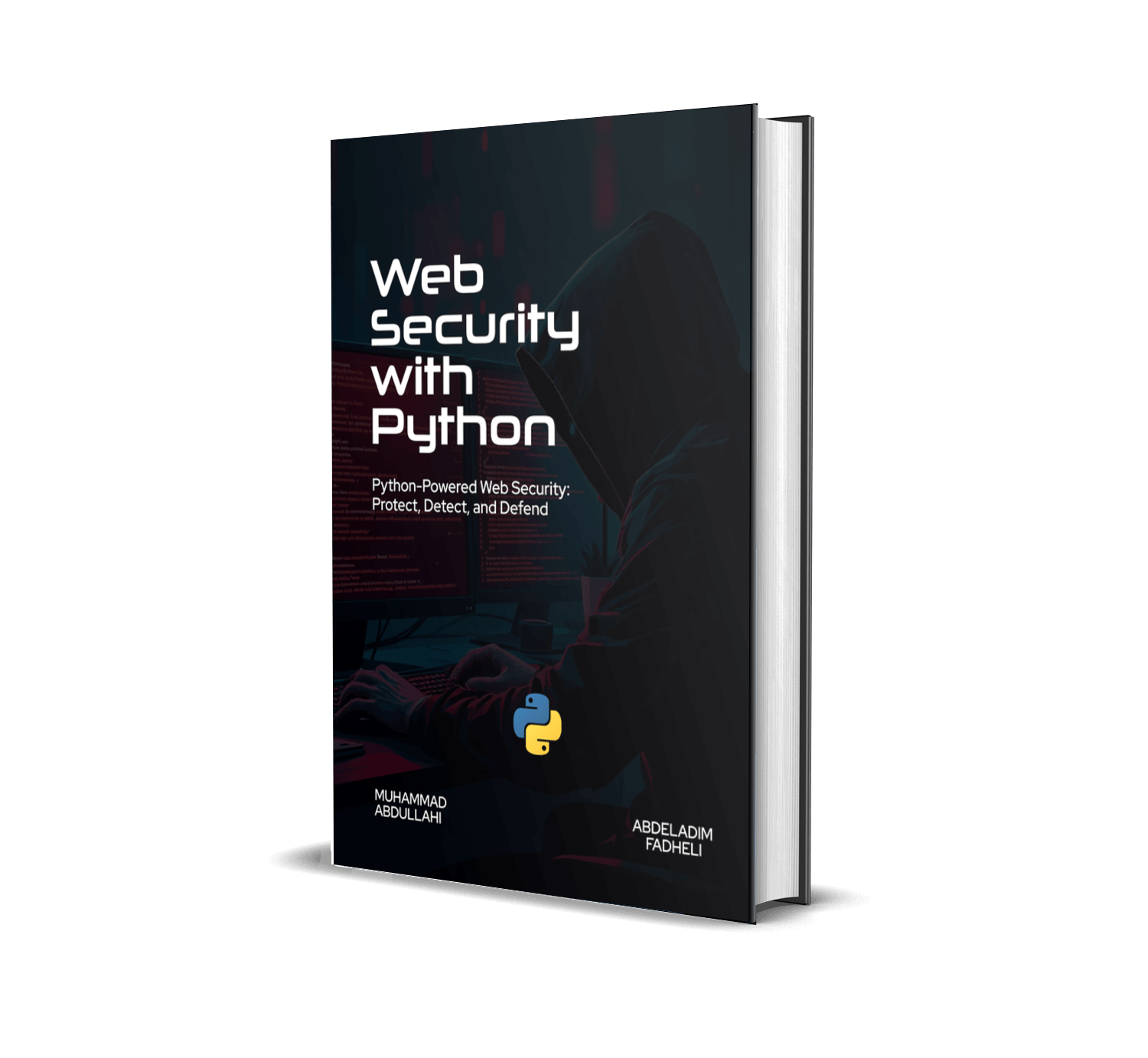
Web Hacking and Security with Python
Master Ethical Website Pentesting with Python
🔐 Learn how to find and exploit vulnerabilities, build security tools, and protect web applications—all using Python!
Why This Book?
In an era where cybersecurity threats are at an all-time high, understanding web security is no longer optional—it's a necessity. Whether you're an aspiring penetration tester, a bug bounty hunter, or a developer looking to secure applications, this book is your practical guide to mastering ethical web hacking with Python.
✅ Hands-on projects—Build hacking tools from scratch
✅ Step-by-step guidance—Easy-to-follow explanations
✅ Real-world scenarios—Learn how attackers exploit vulnerabilities
✅ Ethical hacking focus—Strengthen security, not break it
What’s Inside?
This book is divided into six action-packed chapters that take you from the fundamentals of web security to intermediate penetration testing techniques.
🔹 Chapter 1: Web Fundamentals and HTTP Basics
📌 Understand how websites work and the HTTP/HTTPS protocols
📌 Learn about RESTful APIs and how they can be exploited
📌 Master cookies and session management for secure authentication
📌 Analyze web requests using browser developer tools
🔹 Chapter 2: Information Gathering
📌 Extract WHOIS information and domain details
📌 Build a website crawler to map target websites
📌 Develop tools for DNS enumeration and subdomain scanning
📌 Create a reverse DNS lookup tool to reveal server relationships
📌 Automate email extraction and admin panel discovery
🔹 Chapter 3: Gaining Access & Exploiting Vulnerabilities
📌 Build a password brute force tool to test login security
📌 Perform session hijacking attacks and learn how to prevent them
📌 Create custom HTTP and TCP proxies to analyze traffic
📌 Rotate IP addresses using Tor and proxy services
🔹 Chapter 4: Vulnerability Scanning & Exploitation
📌 Develop a clickjacking vulnerability scanner
📌 Build XSS and SQL Injection vulnerability scanners
📌 Test for command injection flaws
📌 Learn real-world hacking techniques with practical exploitation cases
🔹 Chapter 5: Website Penetration Testing Without Python
📌 Identify and exploit IDOR (Insecure Direct Object References)
📌 Perform path traversal attacks to access restricted files
📌 Test for race conditions and HTTP method manipulation attacks
🔹 Chapter 6: Secure Coding Practices
📌 Implement input validation to prevent SQL Injection and XSS
📌 Use parameterized queries for secure database interactions
📌 Follow best practices for secure authentication and session management
📌 Enforce HTTPS and use the Principle of Least Privilege (PoLP)
Who Should Read This?
🔹 Ethical hackers & cybersecurity enthusiasts looking to master web security
🔹 Penetration testers who want to build custom hacking tools
🔹 Python programmers interested in security automation
🔹 Bug bounty hunters looking to improve their recon and exploitation skills
🔹 Developers who want to secure their applications
💡 Even if you're new to Python, you'll find this book beginner-friendly!
Tools, Vulnerabilities & Technologies Covered
✔ Python 3.6+
✔ Metasploitable
✔ Nmap, WHOIS, & DNS tools
✔ Browser DevTools
✔ Tor, Proxies, & Web Scraping
✔ SQL Injection, XSS, IDOR, & More
What You Will Get
📖 Comprehensive eBook of 206 pages with real-world hacking examples
💻 Fully functional scripts—Ready-to-use Python code
🚀 Step-by-step tutorials with clear explanations & practical skills on web hacking
🔍 Security best practices to protect web applications
💰 One-time purchase. Lifetime updates. No subscription required!
If you purchase now, you get upcoming updates for free. Also, during the remaining days of November 2025, 50% is off!
Get Your Copy Now!
Table of Contents
- Introduction
- Quick Note
- About The Authors
- Muhammad Abdullahi
- Abdeladim Fadheli
- Disclaimer
- Target Audience
- Requirements
- Tools Used in this Book
- Key Concepts
- Installing Metasploitable
- Chapter 1: Web Fundamentals and HTTP Basics
- Understanding How Websites Work
- Understanding HTTP/HTTPS protocols
- RESTful APIs and Web Services
- Cookies and Session Management
- Analyzing Browser Developer Tools
- Conclusion
- Chapter 2: Information Gathering
- Importance of Information Gathering in Penetration Testing
- Extracting Domain Name Info
- Validating a Domain Name
- Extracting Domain WHOIS Info
- DNS Enumeration
- Scanning Subdomains
- Putting Everything Together
- Running the Code
- Building a Website Crawler
- Implementation
- Running Our Code
- Final Words
- Building a Reverse DNS Lookup Tool
- Importance of a Reverse DNS Lookup Tool
- Implementation
- Running Our Program
- Final Words
- Building an Email Extractor
- Implementation
- Running Our Program
- Final Words
- Building an Admin Panel Finder
- Importance of an Admin Panel Finder in a Penetration Test
- Implementation
- Running Our Program
- Final Words
- Port Scanning
- Simple Port Scanner
- Fast Port Scanner
- Port Scanning with Nmap
- Chapter 3: Gaining Access and Building Web Utilities
- Understanding User Authentication
- How Attackers Crack Password Hashes
- Building a Login Password Guesser to Gain Unauthorized Access
- How to Prevent the Discussed Attack
- BruteForcing SSH Servers
- Implementation
- Brute Forcing FTP Servers
- Implementation
- Session Hijacking
- What Is Session Hijacking?
- Setting Up a Vulnerable Lab Environment
- Simulating Session Hijacking with Python
- How to Prevent Session Hijacking
- Final Thoughts
- Listing All Files and Directories on an FTP Server
- Conclusion
- Making an HTTP Proxy
- Conclusion
- Building a TCP Proxy
- Implementation
- Practical Testing
- Conclusion
- Using Proxies to Rotate IP Addresses
- Using Free Available Proxies
- Using Tor as a Proxy
- Conclusion
- Final Words
- Understanding User Authentication
- Chapter 4: Vulnerability Scanning
- Clickjacking Vulnerabilities
- Building a Clickjacking Vulnerability Scanner
- Running Our Program
- Proof of Concept (PoC) for Clickjacking Vulnerabilities
- Protecting Against ClickJacking
- XSS Vulnerabilities
- How Attackers Exploit XSS Practically
- Attack Scenario 1
- Attack Scenario 2
- Building an XSS Vulnerability Scanner
- Advanced (Extended) XSS Scanner
- How to Prevent XSS Vulnerabilities
- Final Words
- SQL Injections
- How Attackers Exploit SQLi
- Building an SQL Injection Vulnerability Scanner
- How to Prevent SQL Injection
- Final Words
- Command Injection Vulnerabilities
- How to Prevent OS Command Injection
- Chapter Wrap-up
- Clickjacking Vulnerabilities
- Chapter 5: Website Penetration Testing Without Python
- Insecure Direct Object References (IDOR)
- Introduction
- Understanding IDOR
- Testing Techniques
- Path Traversal Vulnerabilities
- Understanding Path Traversal
- Testing Methods
- Mitigation Tips
- Final Words
- Insecure Direct Object References (IDOR)
- Chapter 6: Secure Coding Practices
- Input Validation and Sanitization
- Preventing SQL Injection
- Secure Authentication Mechanisms
- Secure Data Handling
- Enforcing HTTPS
- Error Handling and Logging
- Secure Session Management
- Conclusion
Last Updated: dec 2025