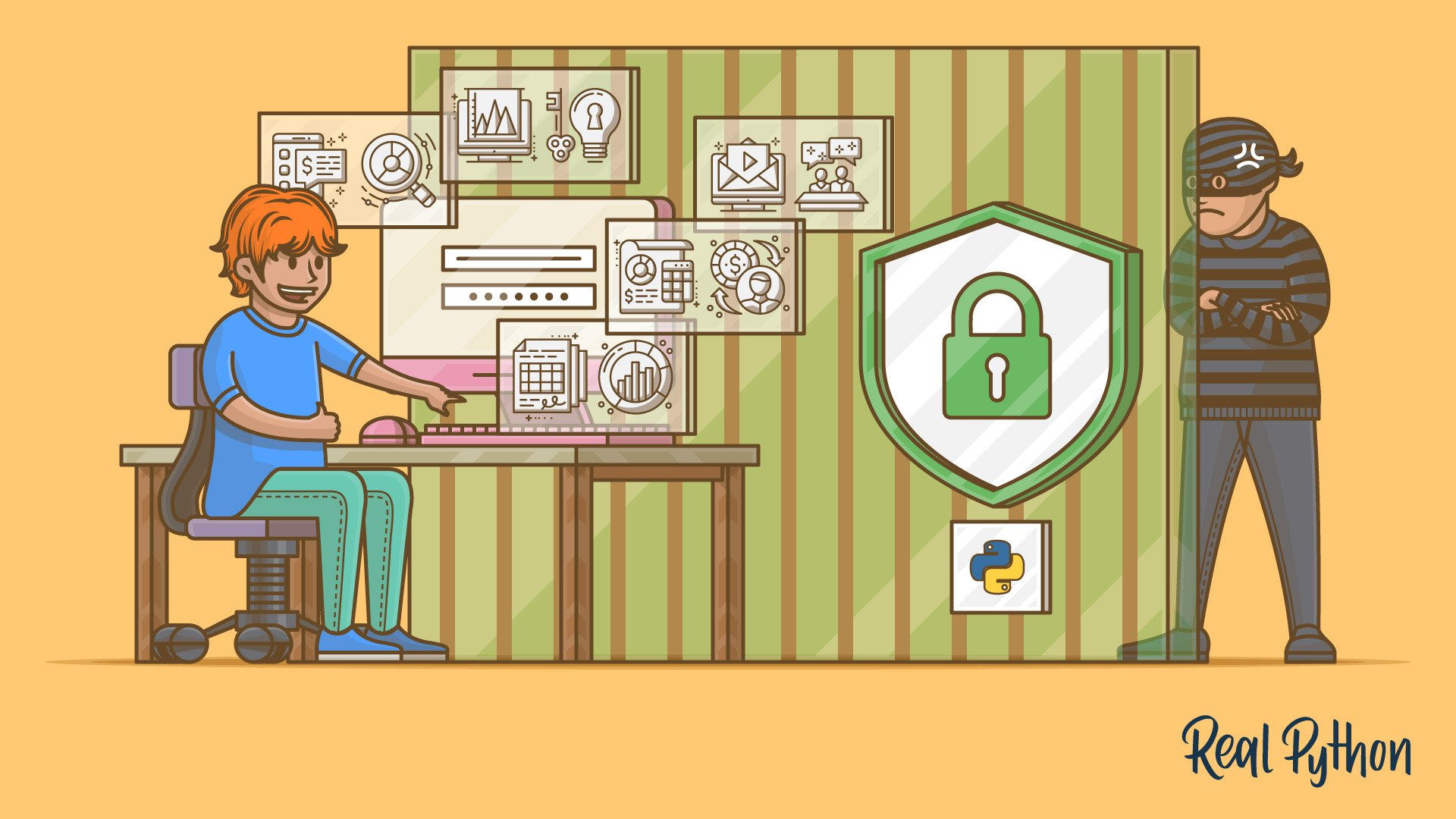

Have you ever wondered why it’s okay for you to send your credit card information over the Internet? You may have noticed the https:// on URLs in your browser, but what is it, and how does it keep your information safe? Or perhaps you want to create a Python HTTPS application, but you’re not exactly sure what that means.
In this course, you’ll get a working knowledge of the various factors that combine to keep communications over the Internet safe. You’ll see concrete examples of how a Python HTTPS application keeps information secure.
In this course, you’ll learn how to:
- Monitor and analyze network traffic
- Apply cryptography to keep data safe
- Describe the core concepts of Public Key Infrastructure (PKI)
- Create your own Certificate Authority
- Build a Python HTTPS application
- Identify common Python HTTPS warnings and errors
What’s Included:
- 9 Lessons
- Video Subtitles and Full Transcripts
- 2 Downloadable Resources
- Accompanying Text-Based Tutorial
- Q&A With Python Experts: Ask a Question
- Certificate of Completion
Downloadable Resources:
Related Learning Paths:












Jeff Anderson
This is by far the best instruction on web HTTPS that I have ever found. This is awesome!