Books can help expand your understanding of a topic in your field. With so many books and topics, the choice can be overwhelming. Even if you narrow your choices, time is precious, and you want to make the most of it by reading books that matter.
Book recommendations
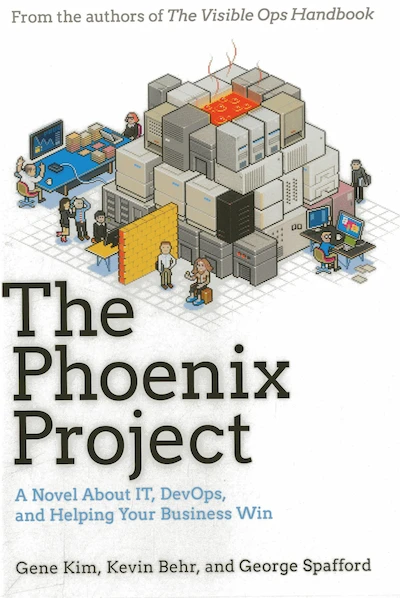
The Phoenix Project
By Gene Kim, Kevin Behr and George SpaffordThe Phoenix Project is a tale about a fictitious company called Parts Unlimited and their newly minted VP of IT, Bill Palmer. With the stock price plummeting and the IT department in disarray, Bill has to navigate the ups and downs of a company looking to bring order to its IT processes.
Throughout the book, Bill interacts with other characters that will remind readers in IT of themselves or colleagues. Many characters represent familiar archetypes of IT organizations. You might recognize the grumpy DBA, the lone engineer who understands critical systems, or senior management that doesn’t understand technology.
This book puts readers in the shoes of various roles in an IT organization to help them understand perspectives, motivations, and what blocks them. Throughout the narrative, the characters learn to embrace new ways of working or fall victim to their old thinking patterns.
Many ideas presented in the Phoenix Project support DevOps principles because it’s by some of the original thought leaders of the movement. Central to the book is the concept of the Three Ways: Flow, Feedback, and Continual Experimentation and Learning.
The Phoenix Project’s follow-up, The Unicorn Project, tells the same story but from a developer’s perspective.
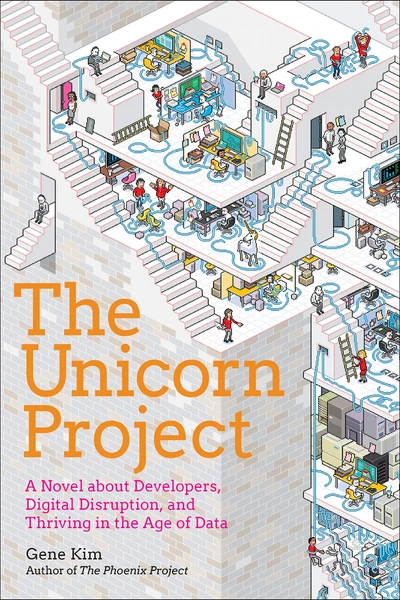
The Unicorn Project
By Gene KimThe Unicorn Project, a companion to the Phoenix Project, is a novel based on a company called Parts Unlimited. The story follows the company’s journey towards modern IT practices.
The story is a retelling of the Phoenix Project from the perspective of a developer named Maxine. Maxine is a skilled senior developer who, through no fault of her own, gets blamed for a disaster and gets banished to the Phoenix Project.
The Phoenix project has a reputation as a career graveyard, and Maxine has to use her resourcefulness to escape the same fate.
Through her natural leadership and development skills, Maxine makes new friends upset with the archaic ways they deliver code at the Phoenix Project. Though unwillingly at first, Maxine becomes the leader of a rebellion against the way they work. With the help of her team, Maxine introduces agile practices like Continuous Integration, data management, and functional programming and starts shifting the Phoenix Project’s culture.
From Maxine’s perspective, readers understand developers’ challenges in shipping production code. Challenges like corporate bureaucracy, blame culture, and lengthy approval processes.
The book advocates for agile practices and streamlined processes so developers can do their job with minimal restriction.
The Unicorn Project is a follow-up book to the Phoenix Project. The Phoenix Project tells the same narrative, told from the perspective of an IT manager.
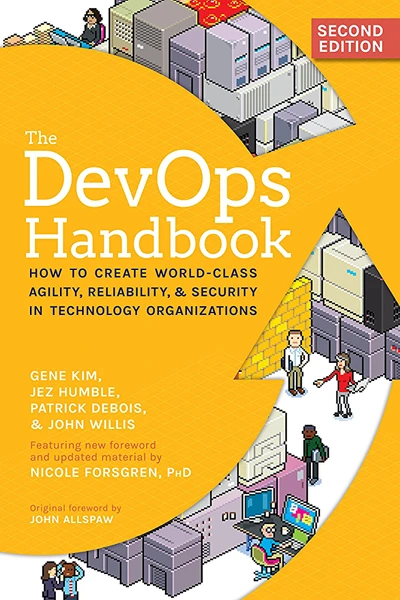
The DevOps Handbook
By Gene Kim, Patrick Debois, John WillisThe DevOps Handbook is a guide to adopting DevOps practices. Doing so helps increase profits, lift work culture, and improve productivity.
The handbook introduces the Three Ways, the three principles underpinning DevOps:
- The Principles of Flow
- The Principles of Feedback
- The Principles of Continual Learning and Experimentation
Each principle includes practical steps to get started with DevOps.
DevOps follows Conway’s Law, which states organizations will produce systems that copy their communication structures. By optimizing communication structures, organizations can manage the constraints of Conway’s Law to achieve well-organized systems.
The DevOps Handbook is foundational reading for anyone in DevOps. It’s particularly useful for managers needing advice and steps towards its adoption.
Investments Unlimited
By Helen Beal, Bill Bensing, Jason Cox, Michael Edenzon, Caleb Queern, John Rzeszotarski, Andres Vega, John Willis, Tapabrata “Topo” PalInvestments Unlimited is a business novel exploring how organizations can make governance less about gate keeping and more about enabling fast, easy, and safe value creation.
The book encourages readers to change how they think about governance. It explores human-centric, high-velocity, and secure software delivery that inspires trust. It’s for anyone who needs to meet compliance, security, and audit requirements.
This tech fable has practical examples you can apply to your workplace. Just as The Phoenix Project and The Unicorn Project weave stories to illustrate DevOps transformation, Investments Unlimited does the same for DevSecOps.
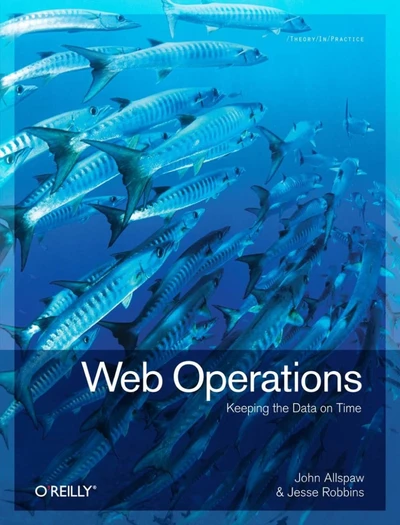
Web Operations
By John Allspaw, Jesse RobbinsIf you manage a web application, you need web operations to ensure it runs smoothly throughout its lifetime.
Web operations is a book that teaches the skills you need to operate your application. The book covers topics like:
- Observability, metrics, and monitoring
- Common database architectures
- Dealing with scalability
- Managing the human component of web operations
- Handling spikes in volume
- Disaster recovery
- Learning from mistakes
- Handling spikes in volume
Web operations focus on gaining skills through real-life experience. The book communicates these topics through essays and interviews involving some of the largest websites on the internet.
Practical Monitoring
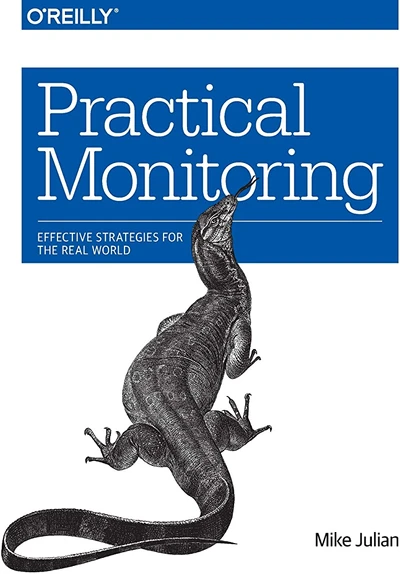
By Mike JulianMonitoring is an essential part of fitting your system with observability. Observability is the ability to assess the internal health of the system with external metrics.
Practical Monitoring gives you an approach to designing and implementing a monitoring strategy. The book is vendor-neutral. Rather than teach you how to implement tools, the book covers principles and techniques that apply to any monitoring tool.
Topics include:
- Fix noisy alerts
- Using statistics to improve your monitoring
- Building a better on-call experience
- Tie business metrics to system metrics
- Common metrics to monitor
- Monitoring as a culture
Practical Monitoring is ideal for operations or site reliability engineers wanting proven methods to improve monitoring.
Site Reliability Engineering
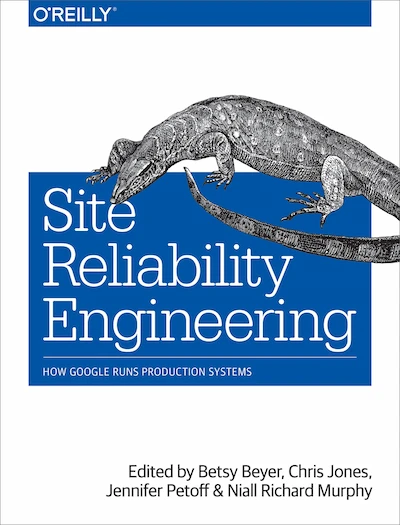
By Betsy Beyer, Chris Jones, Jennifer Petoff, Niall Richard MurphySite reliability engineering (SRE) is what you get when you apply a software engineering approach to IT operations. Tasks typically done by operations teams go to engineers who use software and automation to manage production systems.
Site Reliability Engineering is a book about how Google implements SRE in production. The application of SRE allows Google to deliver high performance and reliability while maintaining rapid growth.
There are eight tenets to SRE:
- Availability
- Latency
- Performance
- Efficiency
- Change management
- Monitoring
- Emergency response
- Capacity planning
Site Reliability Engineering discusses how you can organize SRE teams to execute workloads in line with these tenets.
The book is a collection of essays and articles, with key members of Google’s SRE team explaining their commitment to the entire lifecycle. SRE enabled the success of the largest software systems in the world.
The book applies to operations or site reliability engineers responsible for the entire lifecycle of systems. You can learn from the best practices of Google’s engineers to make systems more scalable, reliable, and efficient.
Cloud Native DevOps with Kubernetes
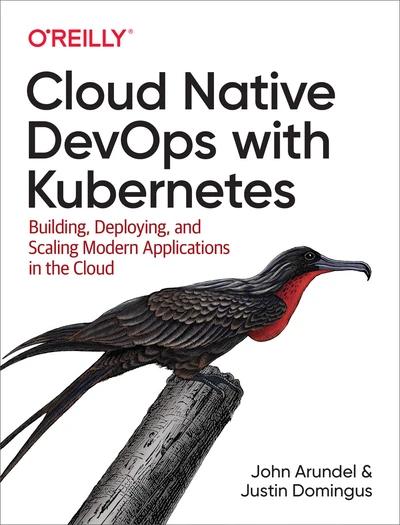
By Justin Domingus and John ArundelKubernetes is an open-source container orchestration system created by Google and managed by the Cloud Native Computing Foundation.
This book explains the concepts of Kubernetes with practical examples to help you start. You’ll learn how to run Kubernetes in Production at scale and optimize for performance, reliability, and cost. It also teaches best practice for security, observability, and monitoring.
Help us continuously improve
Please let us know if you have any feedback about this page.